

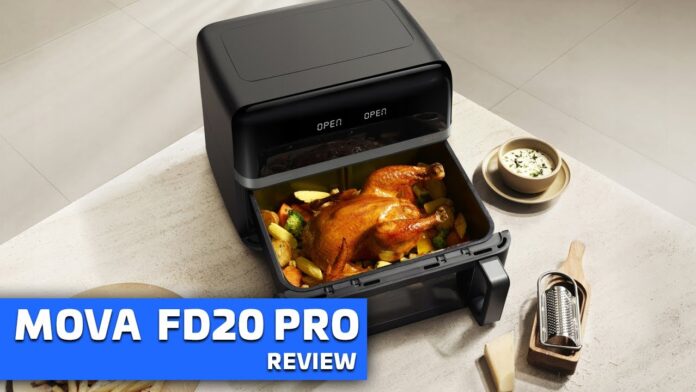
A dual-zone 9 L chamber, up to 2700 W of power, a temperature range from 40 to 230°C, and a window that lets you see every stage of baking: MOVA AeroChef FD20 Pro is entering Polish kitchens with the ambition to take over the duties of a small oven. How does it perform in practice, and is it worth buying? That is what today’s piece is about. I received the device for review directly from the manufacturer.
First impressions
FD20 Pro is MOVA’s newest and larger air fryer. It costs 699 PLN, which means it sits between the mid-range and the higher tier of similar devices. In practice, it’s a 2-in-1 appliance: one large 9-liter basket can be divided in seconds with a divider into two independent 4.5 L zones. Each can run at a different temperature and for a different time, and the SyncFinish function makes sure both dishes finish at the same moment. You can prepare different ingredients independently in both zones or use the entire available space for, for example, a whole chicken.
This is a big appliance, and there’s no point pretending otherwise. Dimensions of about 42.5 x 40.5 x 33 cm mean that on a small countertop you need to intentionally find it a permanent spot. The size comes with sensible ergonomics, though: rubberized feet, carrying handles, wide rear vents, and above all a front window with lighting, so you don’t have to slide the basket out every few minutes just to check the level of browning. The control panel is fully touch-based, clear, and easy to wipe down, although the glossy “piano black” finish really shows fingerprints.
The inside of the chamber and the basket is metal, and the racks have a non-stick coating. In the box you get two grill plates and a separator. You can wash the plates and the divider in a dishwasher, while the manufacturer suggests cleaning the basket itself by hand. It’s a small thing, but in everyday use it makes a difference, especially if you use the FD20 Pro a few times a day.
If the FD20 Pro has one feature you feel immediately, it’s power. 2700 W with a 9 L chamber means it reaches operating temperature very quickly and shortens cooking times. The 40-230°C range opens up additional scenarios, from gentle drying of fruit and herbs to intense high-temperature roasting. On top of that, you get eight modes (seven presets: steak, chicken, fish, fries, vegetables, pizza, cake, plus DIY with manual settings). It sounds simple and it is simple to use, although there’s no built-in ingredient weight system that would adjust a preset to a real-life scenario. When I was preparing delicate salmon, MOVA in the Fish preset suggested 25 minutes at 200°C. If I had followed that suggestion, after that time I would have ended up with salmon chips.
MOVA FD20 in practice
During testing, two things stood out right away: speed and flexibility. The FD20 Pro heats up extremely fast, and there’s also a preheating function for the chamber. The dual chamber is not just two baskets next to each other, but the option for completely different scenarios: different temperature, different time, and in the end everything comes out together thanks to SyncFinish, so nobody eats cold sides. One of my viewers wrote in a comment that dividing a chamber like this can’t work, so I decided to check it. I made two cheese toasts. I set one zone to 180°C and the other to 230°C to compare results. If the sliding divider were a bad solution, the temperature inside would be the same and the cheese would look similar. The difference was visible to the naked eye, which you can also see in the video. Air circulation inside this device works very well, and I also like the option of constant control: the window is fairly large and when you combine that with the lighting, you don’t have to open the basket all the time to check on the food.
The metal interior and the non-stick coating in the basket really do make life easier. The racks and the divider can go into the dishwasher, and the basket itself is quick to wash by hand. As for practical drawbacks: the glossy panel easily picks up fingerprints and small scratches, and the window, although fantastic in use, requires patience when cleaning it from the inside. I also don’t know whether I wouldn’t prefer the buttons placed higher up on the housing rather than on the front. It’s worth cleaning the touch panel regularly, because greasy fingerprints that build up on it affect button responsiveness. I also have to add that this air fryer takes some getting used to. At first you need to master the option of turning on one zone or both at once, adjusting times, synchronization functions, and so on. And something is constantly blinking on the display or options are changing, which can be very disorienting at the beginning.
